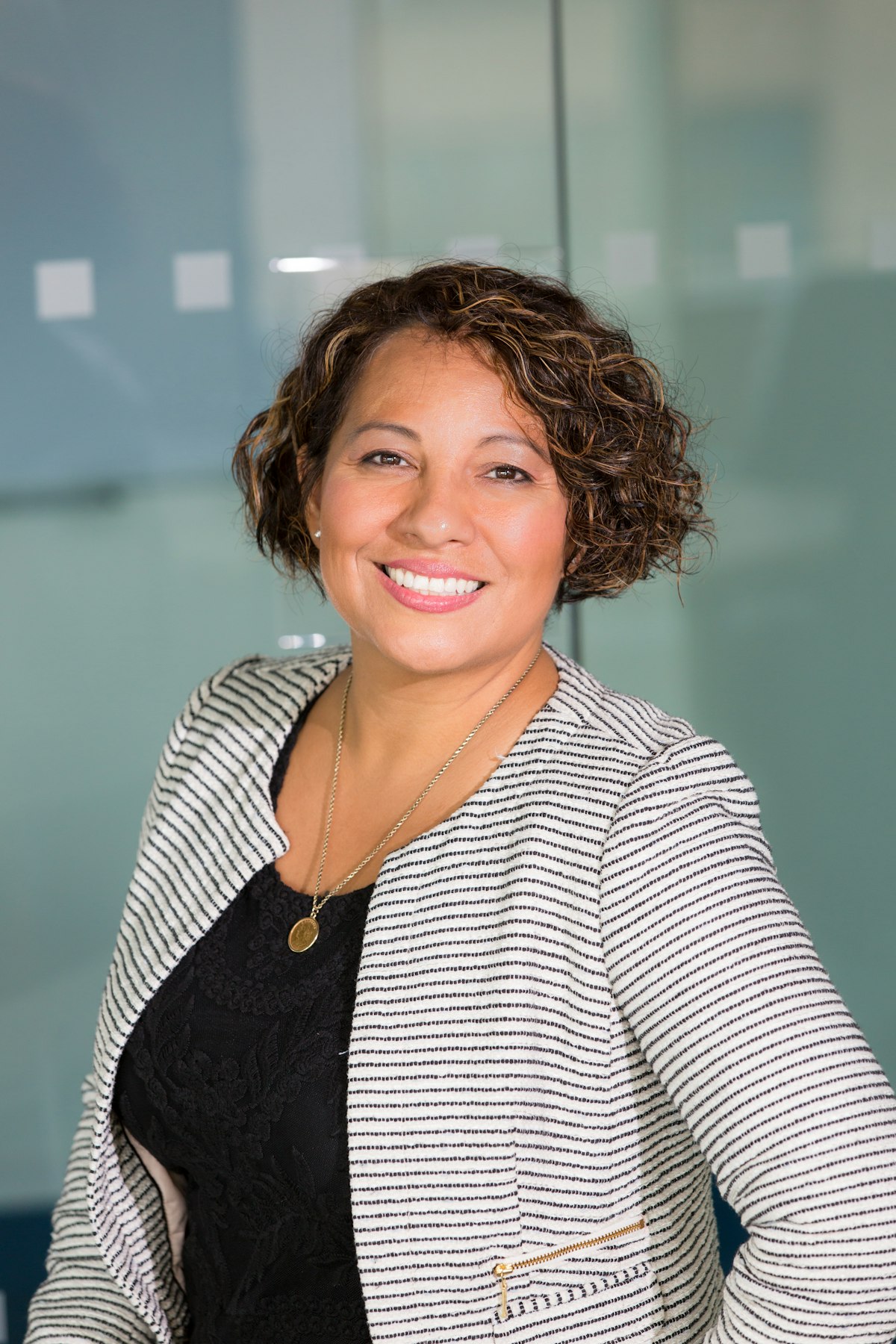
It was a Tuesday morning in October 2014 when Sarah Martinez watched a third-grader named Deja quietly close her lunchbox and push it under her chair. The cafeteria around her was loud and full, but Deja sat perfectly still, the kind of stillness that comes from embarrassment, not calm. The box was empty. Had been for weeks.
Martinez was volunteering that day at Westside Elementary as part of a school reading program. She wasn't there to solve hunger. But some things you can't unsee.
"I went home that night and I couldn't stop thinking about it," Martinez says now, leaning back in a folding chair inside the Port Laken Community Food Network's main distribution hub on Harbor Avenue. "I kept asking myself, what am I actually doing with my time? What matters? And the answer felt very clear."
That weekend, Martinez organized her first food collection: a cardboard box outside her parish at St. Augustine's, a handwritten sign, and a prayer that someone would notice. By Sunday evening, the box was full.
Twelve years later, the Port Laken Community Food Network serves more than 2,000 families every month across three distribution sites. It has diverted over 900,000 pounds of surplus food from local restaurants, grocery chains, and catering companies since its founding.
THE DIGNITY MODEL
Traditional food banks operate on a logistics framework: sort, pack, distribute. Efficiency is the goal. Martinez understood that efficiency and dignity don't have to conflict, but in many programs, they do.
"When you hand someone a box filled with choices someone else made for them, you're sending a message," she explains. "You're saying, 'We'll take care of your survival, but your preferences don't matter.' That's not care. That's charity in the worst sense of the word."
At all three Port Laken Community Food Network locations, families walk through an open floor market and fill their own bags. Bilingual staff and volunteers are on hand to assist, not supervise.
BUILDING THE NETWORK
The breakthrough came in 2018 when Martinez convinced three downtown restaurants (Portside Grille, Canela, and The Mariner) to pilot a weekly surplus food program. Rather than composting unsold food at close, the kitchens would box it and have it picked up by Network volunteers each evening.
That first week, they collected 340 pounds of food. By the end of year one, the program had expanded to 22 partner restaurants and was rescuing an average of 4,200 pounds per week.
"Once Portside came on board, everyone else wanted in," says David Okafor, owner of Canela. "Sarah made it simple. She handled the pickup logistics, handled the food safety documentation, handled all of it. We just had to say yes."
Today the Network partners with 67 local businesses. In 2025 alone, it distributed 183,000 pounds of food and prevented an estimated 47,000 pounds of edible food from entering landfills.
BEYOND THE PANTRY
In 2020, the Network launched its Kitchen Skills Series, offering free, bi-weekly cooking classes held at Harbor Community Center that teach budget cooking, nutrition literacy, and meal planning. In 2022, a culinary job training track launched in partnership with the Port Laken Workforce Development Office.
"Sarah doesn't run a food pantry," says Dr. Luz Herrera, Director of Community Health at Port Laken Memorial. "She runs a food ecosystem. The pantry is just where it's most visible."
For those interested in volunteering, information sessions are held every first Saturday of the month at the Harbor Community Center, Room 4. Contact info@portlakenfoodnetwork.org.